Protect, don’t torture them: A warning from within police

Dressed in a dark suit, Malawi Police Service Commissioner Prescot Mwayiulipo stood before a small audience in Blantyre with a message that went beyond the 13 police officers seated facing him.
Before starting his presentation during a recent human rights training at Crossroads Hotel, Mwayiulipo looked around the room.
“How many police officers are here?” he asked.
Hands went up. Thirteen.
The room comprised police officers, prison warders, staff from the Malawi Human Rights Commission (MHRC) and journalists attending the training on preventing torture and promoting respect for human rights in places of detention.
Then came a question that changed the atmosphere.
“How many of you, officers, can admit having committed brutality or torture?”
No hand went up.
One journalist responded by pointing to a gap in his teeth, saying he had lost some teeth at the hands of police officers.
The comment brought laughter, but beneath it lay a painful reality.
Since its establishment in 2021, the Independent Complaints Commission (ICC) has received 592 complaints of alleged police brutality, of which 268 investigations have been completed.
ICC deputy director of investigations Grant Kankhulungo says the commission has so far secured three convictions, while 22 cases have been recommended to the Director of Public Prosecutions (DPP) for prosecution, and 20 for disciplinary action.
The figures suggest that police brutality is not simply a subject for human rights workshops.
For victims, it is a personal experience that can leave lasting physical and psychological scars.
Patrick Mwale, from Mzimba, knows this too well.
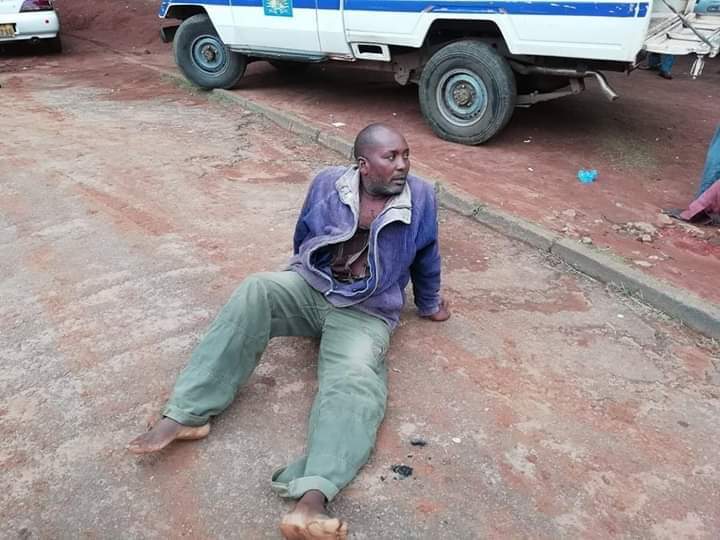
Accused of involvement in the illegal gun trade, Mwale says his encounter with police left him with injuries on several parts of his body.
The physical wounds are slowly healing, but the psychological scars remain fresh.
“They wanted to kill me. I survived by the grace of God,” Mwale says, showing scars on the back of his arm.
But Mwayiulipo was not looking for confessions from his juniors. He was challenging them to reflect on the responsibility that comes with the authority to arrest, detain, investigate and use force.
Police arrest and investigate cases, and their prosecutors handle about 90 percent of criminal cases in the country.
As head of prosecutions in MPS, Mwayiulipo understands the central role police play in the justice system.
But before a case reaches court, the manner in which a suspect is arrested and treated in custody can determine whether justice is served—or denied.
Speaking during the training, Mwayiulipo reminded officers that fighting crime and respecting human rights must go together.
For about 30 minutes, he took them through the legal boundaries surrounding police powers.
“The law gives you [police] authority to maintain order, but also places limits on how that authority can be exercised,” he said.
Torture, he explained, is not limited to physical assault.
“When you deliberately isolate a detainee in a lone cell, intimidate them, humiliate them or subject them to mental suffering, you can also be violating human rights,” he said.
Mwayiulipo also discussed the use of force, reminding officers that police have several tools at their disposal, including batons, handcuffs, shields, pepper spray, tear gas, water cannons, dogs, electroshock weapons, rubber bullets and firearms.
But those tools do not give officers unlimited power.
“Force must always be necessary, proportionate and reasonable,” he said.
Firearms, he stressed, must remain a last resort.
He said, an officer’s decision to use force can later be tested in court, where the circumstances are assessed against what a reasonable officer would have done in a similar situation.
Mwayiulipo also emphasised that human rights protections apply to everyone, regardless of political affiliation, religion, gender or social status.
A suspect may be accused of committing a crime, but the accusation does not remove their rights, he argued.
“Detainees are entitled to dignity, legal representation, medical care, communication with relatives, adequate nutrition, the right to remain silent and to be brought before court within the legally required period,” he said.
The warning comes amid continued concerns over police misconduct, including the death of Buleya Lule while in police custody.
Lule was arrested in connection with the abduction of a boy with albinism in Dedza in 2019 and later died while in police custody.
Police investigations into his death led to the arrest of the 13 police officers. Six were sentenced for murder after being found guilty torturing him which led to his death. The other seven were aquitted.
For Mwayiulipo, however, the answer is not simply more criticism of the police.
He said it was better policing through knowledge, professionalism and accountability.
He warned fellow officers that they cannot hide behind the institution when they violate citizens’ rights.
The law, he said, will not look away.
“Officers who abuse their powers will face accountability as individuals,” he said.
If every police officer understood the law and human rights principles as clearly as Mwayiulipo presented them, perhaps the MHRC and ICC would receive fewer complaints alleging torture, excessive use of force and abuse of authority.
This is why the Blantyre training was organised.
Although only 13 officers were physically present, the message was meant for the more than 19 000 officers serving across Malawi.
From Nsanje to Chitipa, the same rules apply.
For some officers, the training was an opportunity to turn those lessons into everyday practice.
Ndirande police officer Angela Gama said the training had helped officers understand how best to manage suspects and avoid situations that could lead to human rights violations.
“We are servants and the police service is being reformed. This will help us make this reform real,” she said.
MHRC commissioner Therese Ndanga says the training responds to concerns identified through years of monitoring and investigations into places of detention.
She said the commission had documented cases where detainees were beaten, tortured and, in some instances, denied food.
“It is, actually, a suspect’s right to be treated with dignity and that their rights continue to be respected as humans in places where they are serving their sentences or awaiting trial,” Ndanga said.
The training, supported by Irish Rule of Law International, was intended to close the gap between police powers and human rights obligations.
Ndanga said: “Accountability must accompany training,” adding that the commission would continue monitoring whether its recommendations are implemented and report to Parliament, where necessary.